

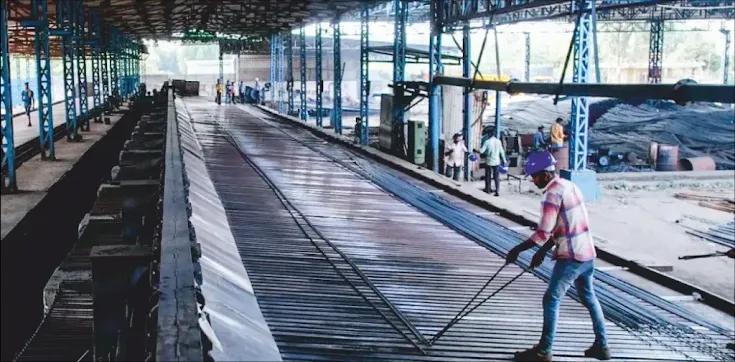
TMT (Thermo-Mechanically Treated) bars are a critical component in modern construction, known for their strength, durability, and flexibility. Understanding how TMT bars are manufactured helps builders, engineers, and buyers appreciate the quality and technology involved in producing reliable reinforcement steel. Below is a step-by-step explanation of the TMT bar manufacturing process.
Step 1: Selection of High-Quality Raw Materials
The manufacturing process begins with the selection of premium raw materials, primarily steel billets. These billets are produced from iron ore and recycled steel under controlled conditions to maintain the required chemical composition. Quality raw materials are essential to ensure uniform strength and performance in the final TMT bars.
Step 2: Heating in the Reheating Furnace
The steel billets are fed into a reheating furnace, where they are heated to extremely high temperatures, typically around 1100–1200°C. Uniform heating is crucial as it prepares the billets for smooth rolling and ensures consistent metallurgical properties throughout the bar.
Step 3: Hot Rolling Process
Once heated, the billets pass through a series of rolling stands in the rolling mill. During this stage, the billets are shaped into long steel bars of required diameters. Precise rolling ensures accurate dimensions, uniform rib patterns, and smooth surface finish, which are vital for strong bonding with concrete.
Step 4: Thermo-Mechanical Treatment (TMT)
This is the most important stage in the process. Immediately after rolling, the hot bars are rapidly quenched using high-pressure water jets. This sudden cooling hardens the outer surface of the bar while keeping the core hot and soft. The core then undergoes controlled cooling, creating a tough outer layer and a ductile inner core.
Step 5: Atmospheric Cooling
After quenching, the bars are laid on cooling beds and allowed to cool naturally in the open atmosphere. During this phase, heat from the core moves outward, forming a balanced microstructure that provides strength, flexibility, and resistance to seismic forces.
Step 6: Cutting and Sizing
Once cooled, the TMT bars are cut into standard lengths as per market and project requirements. Automated cutting ensures uniform length, reducing wastage and improving handling at construction sites.
Step 7: Quality Testing and Inspection
Every batch of TMT bars undergoes strict quality testing. These tests include tensile strength, yield strength, elongation, bend and rebend tests, chemical composition analysis, and dimensional checks. Only bars that meet BIS and industry standards are approved for dispatch.
Step 8: Bundling, Marking, and Dispatch
After passing quality checks, the TMT bars are bundled, properly marked with identification details, and prepared for transportation. Proper packaging ensures protection from damage during storage and delivery.
Conclusion
The manufacturing of TMT bars is a carefully controlled process that combines advanced technology, precision engineering, and strict quality checks. From raw material selection to final inspection, each step plays a vital role in producing reliable reinforcement steel. Understanding this process helps buyers make informed choices and recognize the value offered by a trusted TMT bar manufacturer committed to quality, safety, and long-term structural performance.